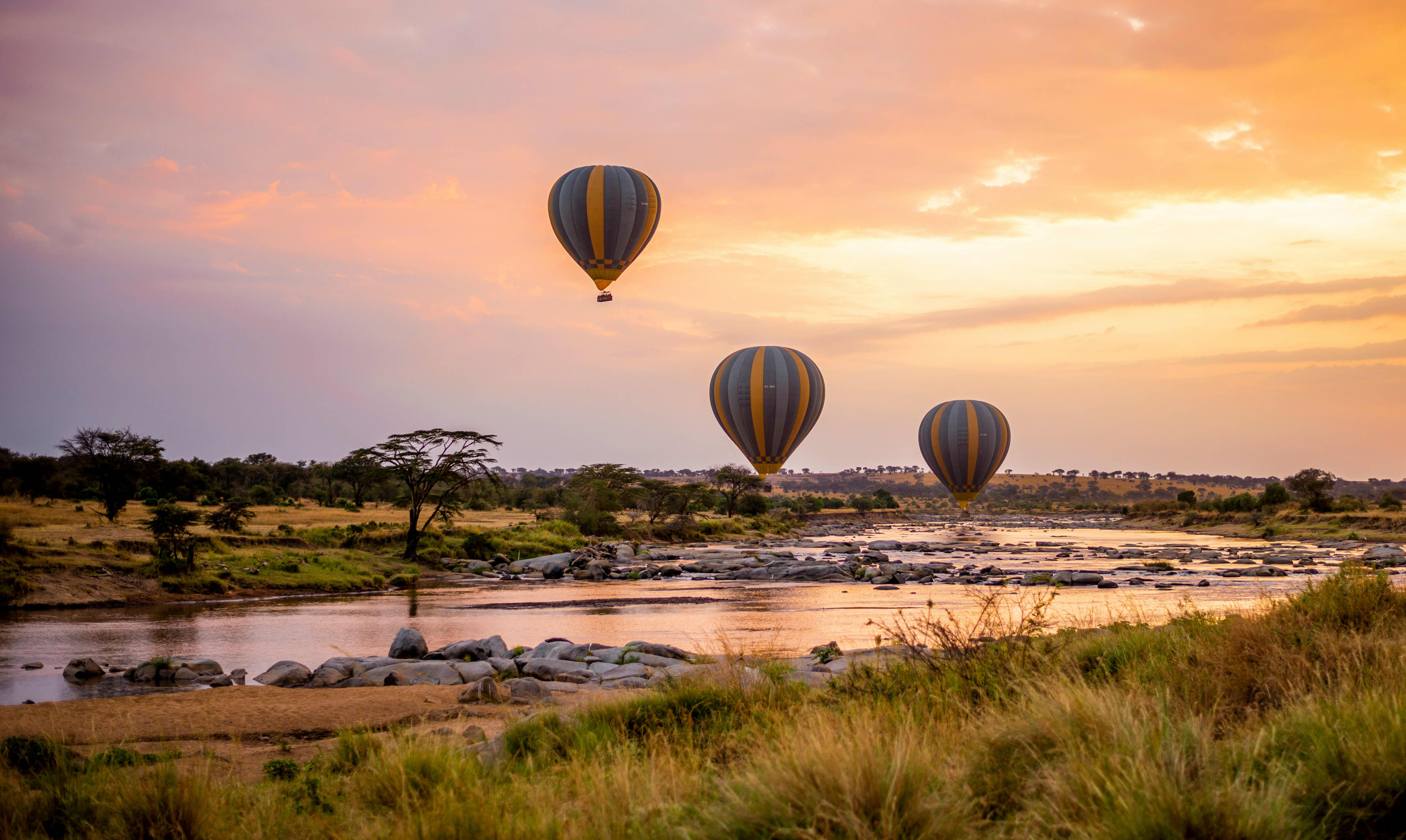
Serengeti
The Greatest Wildlife Show on Earth — 1.5 Million in Motion
The Serengeti: Africa's Heartbeat
The Serengeti National Park is the anchor of the East African safari experience, covering 14,763 square kilometres of near-endless savanna, acacia woodland, and volcanic kopjes. Its fame rests on the Great Wildebeest Migration — a permanent, 365-day search for fresh grazing involving roughly 1.5 million wildebeest, 300,000 zebras, and hundreds of thousands of Thomson's gazelles. This colossal herd follows a clockwise loop dictated by phosphorus-rich volcanic soils and seasonal rainfall.
Month-by-Month Migration Calendar 2025–2026
January – February | Southern Serengeti & Ndutu: The herds converge on the nutrient-dense short-grass plains of Ndutu. February marks peak calving season, with approximately 8,000 calves born daily. This explosive birth rate attracts a gauntlet of predators — lions, cheetahs, leopards, and hyenas — creating some of the most intense wildlife action on earth.
March – May | Western Corridor: Long rains trigger the northward trek. By May, massed columns up to 40 km long funnel through the central plains. The 'rut' erupts between May and June — half a million wildebeest mate in less than a month, filling the air with noise and territorial clashes.
June | Grumeti River Crossing: The herds face their first major river obstacle. Massive Nile crocodiles lurk in the Grumeti River, and the crossings here are an extraordinary spectacle — more intimate and less crowded than the famous Mara crossings to the north.
July – August | Northern Serengeti & Mara River: The herds reach the Kogatende area and the Lamai Wedge. From late July through August, the iconic Mara River crossings unfold — thousands of animals mass on the riverbank, then plunge in a chaotic 'leap of faith' into crocodile-infested waters. Crossings are unpredictable; herds may gather for days before a single animal triggers the stampede.
September – October | Return Journey: As the short rains arrive in October, the herds begin the southward return through the eastern Lobo woodlands. By December, the loop is complete — the animals are back on the southern plains, ready to calve again.
Predator Capital of the World
The Serengeti hosts the highest concentration of large predators on earth. Lions dominate the central region; leopards are frequently spotted lounging in sausage trees along the Seronera Valley. Cheetahs hunt the open southern plains with extraordinary speed. For the rare black rhino, the Moru Kopjes in the southwest remain the primary sanctuary — thermal drones now patrol the area to protect them around the clock.
Wildlife at a Glance
African Lion: 3,000+ | African Leopard: 1,000+ | Cheetah: 1,000 | Wild Dog: recovering populations | Black Rhino: protected in Moru Kopjes
Serengeti Zones Explained
Central Serengeti (Seronera): Year-round resident wildlife including large lion prides, leopards, and hippos in the Seronera River. Best for first-time visitors. Northern Serengeti (Kogatende/Lamai): The exclusive zone for Mara River crossings (July–October). Less crowded than the Kenyan Masai Mara side. Western Corridor: Key for the Grumeti crossings in June and unique riverine habitats.
Things to Do
Best Time to Visit
June–October for dry-season game viewing and the famous Mara River crossings. January–February for the calving season and peak predator activity. Every month offers a different chapter of the migration story.
Climate
Warm and sunny year-round with two rainy seasons: long rains (March–May) and short rains (November). Dry season (June–October) brings cooler mornings (12–15°C) and warm afternoons (25–28°C). Wet season months are greener and less crowded, with fewer tourists and lower prices.